Gas vs Electric Geyser vs Immersion Rod: Cost per Bath and Safety
What a bucket bath really costs with an electric geyser, a gas geyser or an immersion rod, and the safety rules that matter: ventilation, earthing, steel buckets.
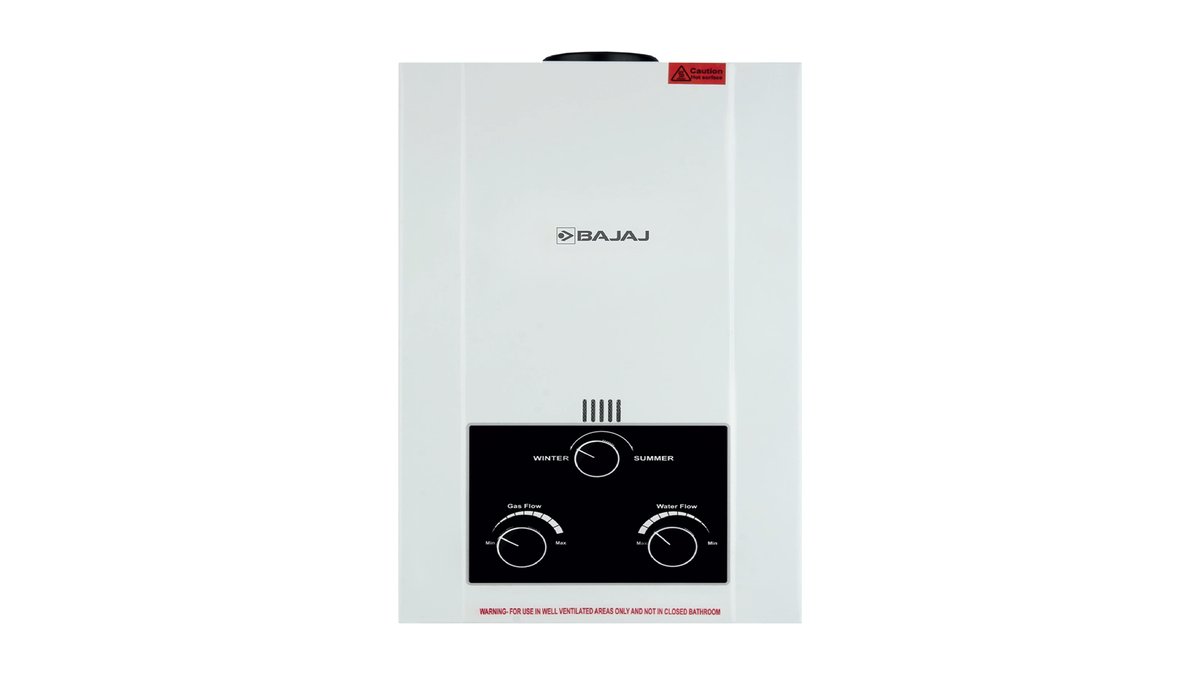
Photo: Bajaj
Basgo saysGas: cheapest, if vented. Rod? Never a steel bucket.
Three ways to get a hot bucket in an Indian winter, at three very different prices and risks. Here’s what each really costs per bath, and the safety rules that matter for each. In October 2026, a 26-year-old woman in Hyderabad died while drawing hot water heated by an immersion rod, so the rules matter as much as the rupees.
What a bath costs
Our assumptions: a 20-litre bucket heated from 15°C to 40°C, electricity at ₹8 a unit, LPG at ₹942 for a 14.2 kg cylinder (Delhi’s price since June 2026), a gas geyser that’s 80% efficient and an immersion rod that’s 90% efficient.
| Method | 20 L bucket | 40 L short shower | 8-minute shower (64 L) |
|---|---|---|---|
| LPG gas geyser | ₹3.77 | ₹7.55 | ₹12.07 |
| Electric geyser | ₹4.65 | ₹9.30 | ₹14.88 |
| Immersion rod | ₹5.17 | n/a | n/a |
Two things change the picture:
- A storage geyser left on all day spends extra just keeping its tank hot: up to ₹2.77 a day for a 15 litre geyser at the 2026 5-star limit, and up to ₹4.06 at the 1-star limit. Switch it off between uses, or use a timer.
- Your tariff. At ₹5–6 a unit, electric baths cost a third less.
So gas is cheapest per bath, but by about a rupee, not a fortune. The bigger differences are in safety.
Electric geyser: safest and simplest
- Earthing, a 16 A socket and an MCB are a must, fitted by an electrician. Havells notes that the shock-protection plug on some geysers is not a substitute for earthing.
- The ISI mark is mandatory for every geyser sold in India.
- Switch it off after use, and service it yearly, including the anode rod and the safety valve.
Our geyser specs guide explains sizes and stars.
Gas geyser: cheapest, if it’s ventilated
Most Indian LPG geysers are flueless: they burn gas and release the exhaust into the room. In a small, closed bathroom, they use up oxygen and can produce carbon monoxide, which has no smell. Couples have died this way in Bengaluru and Ghaziabad, and a 2013 medical study described 26 cases linked to flueless geysers in poorly ventilated bathrooms. No national figures exist, so the real count is unknown.
If you choose gas:
- Ventilate: keep a window open or an exhaust fan running whenever it’s on.
- Prefer a model with an oxygen-depletion sensor, which shuts the geyser off if the oxygen in the room runs low.
- Fit it outside the bathroom if you can, so only hot water comes in.
- Never close the door and window for a long shower with the geyser running.
- Look for the ISI mark. It has been compulsory for LPG geysers since 2019.
In late October, 6 litre-a-minute gas geysers sold for about ₹6,800–7,600.
Immersion rod: cheapest to buy, riskiest to use
An immersion rod costs about ₹500–600, but it puts a bare heating element and mains electricity into a bucket of water. In the Hyderabad case, the woman dipped a steel vessel into the bucket while the rod was on. A fact-check published in 2025 called steel buckets extremely dangerous, and noted that a rod touching the side of a plastic bucket can melt it.
If you use one:
- Buy only an ISI-marked rod (standard IS 368). It’s mandatory.
- Use a deep plastic bucket, never steel or metal.
- Submerge the rod before switching on, and clip it so it doesn’t touch the sides.
- Switch off and unplug before touching the water or putting anything in the bucket.
- Never leave it unattended, and keep children away.
It’s also the slowest: a 1.5 kW rod takes about 25 minutes to heat a 20-litre bucket.
Which should you choose?
| Your situation | Best choice |
|---|---|
| Most homes with reliable electricity | Electric storage geyser |
| Kitchen sink | 3 litre instant geyser |
| Frequent power cuts, well-ventilated space | Gas geyser, fitted outside the bathroom |
| Occasional use, very tight budget | ISI immersion rod, with every rule above |
Honest verdict
An electric storage geyser is the best choice for most homes: about ₹4.65 a bucket, and the safest of the three when it’s earthed and switched off between uses. Gas saves about a rupee a bath, but only with real ventilation. An immersion rod is cheapest to buy and riskiest to use: if you use one, never with a steel bucket, and always unplug it before you touch the water. For models and prices, see the best geysers by size and budget.
Questions people ask
Which is cheapest per bath: a gas geyser, an electric geyser or an immersion rod?
On our assumptions (₹8 a unit, ₹942 an LPG cylinder), heating a 20-litre bucket to 40°C costs about ₹3.77 with a gas geyser, ₹4.65 with an electric geyser and ₹5.17 with an immersion rod. An 8-minute shower costs about ₹12 with gas and ₹15 with electricity. A storage geyser left on all day adds ₹2.77–4.06 a day just to keep its tank hot.
Are gas geysers safe?
Only with good ventilation. Indian LPG geysers usually release their exhaust into the room. In a closed bathroom they use up oxygen and can produce carbon monoxide, which has killed people in Indian homes. Keep a window open or an exhaust fan running, choose a model with an oxygen-depletion sensor, and, best of all, fit the geyser outside the bathroom so only hot water comes in.
Is it safe to use an immersion rod?
It's the riskiest option. Use only an ISI-marked rod in a deep plastic bucket, fully under water and away from the sides, and switch it off and unplug it before touching the water or putting anything into the bucket. Never use a steel bucket. In October 2026, a woman in Hyderabad died after dipping a steel vessel into a bucket while the rod was on.
Should I switch off my geyser after using it?
Yes, unless you need hot water through the day. A storage geyser left on spends electricity just keeping its tank hot: up to about ₹2.77 a day for a 15 litre geyser at the 5-star limit, and up to ₹4.06 for a 1-star one. A timer or a smart geyser can heat the water just before your baths.
Does an electric geyser need earthing?
Yes. Makers specify proper earthing, a 16 A socket and an MCB for a storage geyser. Havells notes that the shock-protection plug some geysers come with doesn't replace earthing. Have an electrician check the earth connection before winter, especially in older homes.