Do Air Purifiers Really Work? PM2.5, '99.99%' and AQI Meters, Decoded
Air purifiers do cut indoor PM2.5, if they're sized right and the room is shut. What studies in Delhi found, what '99.99%' means, and if AQI meters are worth it.
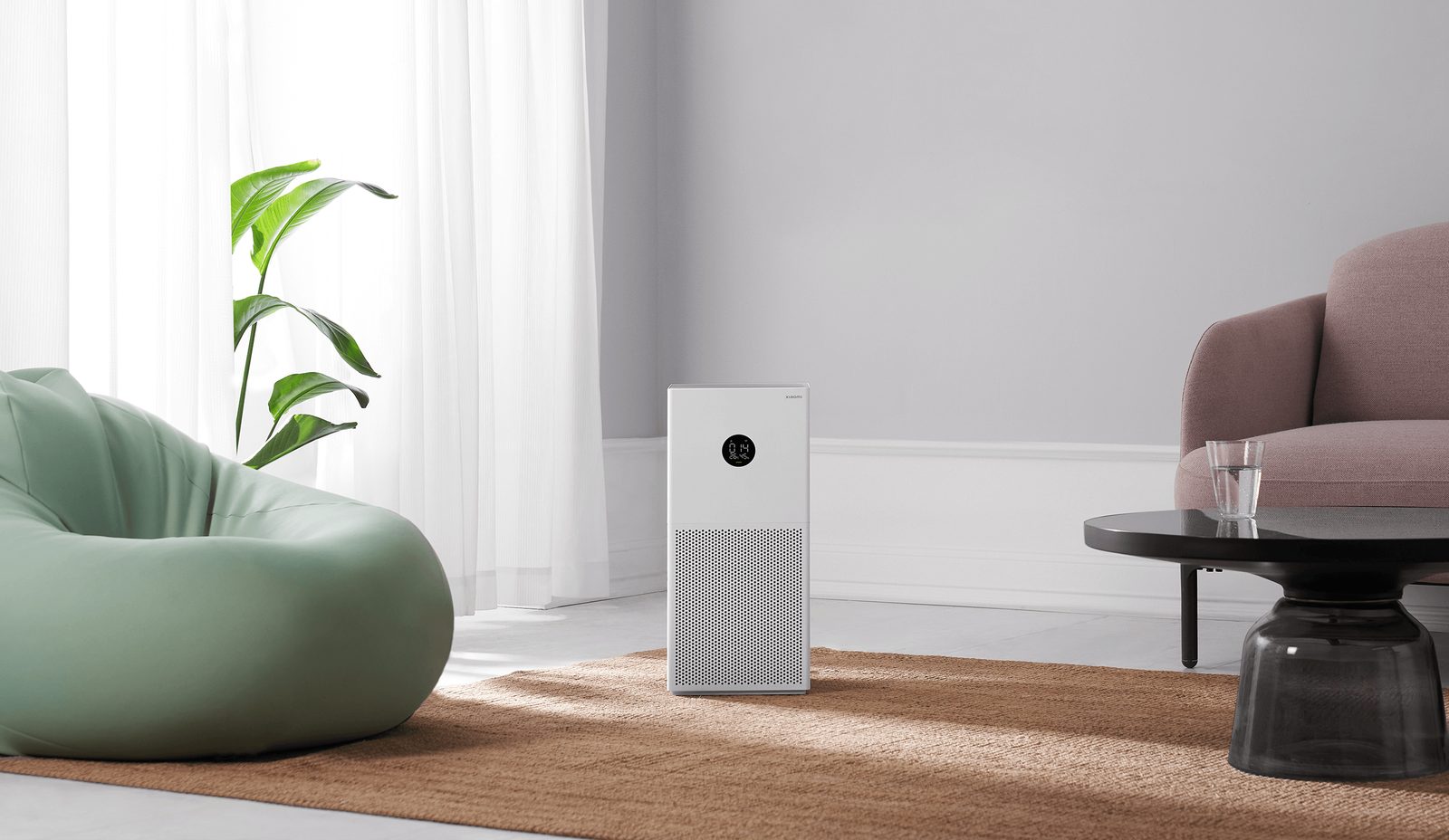
Photo: Xiaomi
Basgo saysYes, in a closed room. Not a fix for stale air.
Two searches have broken out this October: “air purifier for home is good or bad” and “does air purifier remove dust”. Delhi’s AQI crossed 240 on 21 October and the first stage of the city’s pollution plan came into force, so people are asking before they spend. Here’s the short answer, then the evidence: a purifier does cut the fine particles in your room, often by half or more, but only if it’s sized for the room, the doors and windows are shut, and the filter is changed.
What the studies found
- Delhi, winter 2015–16: researchers tested two purifiers in a 150 sq ft room in Hauz Khas while outdoor PM2.5 averaged 260 µg/m³. A HEPA filter strapped to a fan and a commercial HEPA purifier both cut indoor particles substantially. But the purified air was often still worse than in moderately polluted cities, and the authors called purifiers “not a replacement for public action.”
- Delhi modelling, 2019: home filtration could cut residents’ PM2.5 exposure by 31–72% in homes without smokers.
- Detroit, US: in a trial in homes, purifiers sold as “HEPA-type” cut median indoor PM2.5 by 58% and true HEPA units by 65%.
- Hong Kong: a year-long trial with older people measured household PM2.5 28% lower than with a dummy unit.
The catch shows up in a Delhi study by the University of Chicago’s EPIC India. Indoor PM2.5 in Delhi homes was about 20 times the WHO’s guideline, in rich and poor homes alike. About a quarter of high-income homes owned a purifier, yet their indoor air was only about 10% cleaner. Owning a purifier isn’t the same as using it right.
Why yours might not be working
- It’s too small for the room. Check its CADR against your floor area (our specs guide has the maths).
- The door or window is open. A purifier can’t clean the city’s air.
- It runs on the lowest speed, where its clean-air output is a fraction of the rated figure.
- The filter is clogged. In a Delhi winter, filters fill in months.
- It’s boxed into a corner or behind furniture. Give it space on all sides.
- Cooking spikes. Indoor PM2.5 rises fastest at cooking times, so run the chimney or exhaust fan while you cook.
What a purifier can’t do
- Fix stale air. It doesn’t remove CO2. A closed room still needs airing now and then.
- Remove gases unless it has a substantial carbon filter, and even then only some.
- Clean surfaces. It catches dust in the air, not dust on the floor.
- Protect you outdoors. For that, there’s a well-fitted N95 mask.
“99.99%” and “kills viruses”, decoded
A filter’s “99.97%” or “99.99%” is how much it caught in a lab test, in one pass. It doesn’t mean the air in your room becomes 99.99% clean. India’s consumer regulator, the CCPA, has flagged unbacked claims like “kills 99.99% germs” as misleading, and after the Consumer Affairs Minister criticised purifier makers over false claims in October 2024, the government announced market checks. A percentage without a named test is marketing.
The feature to avoid: ozone
The WHO’s India advisory on air pollution says to avoid purifiers that work by generating ozone, which irritates the lungs. Some ionizer and “plasma” features make a little ozone as a by-product, and the US EPA says home UV units have limited effect on their own. A plain HEPA filter is the proven part, so switch the extras off if you can.
Are AQI meters worth it?
A home AQI meter uses a laser particle sensor, the same kind of module that sells on its own for ₹800–1,400. Studies of these sensors, including tests in Delhi and Bangalore, found:
- They follow the ups and downs well, but tend to read high, especially in humid air.
- They’re weaker at PM10 than at PM2.5.
- Even after calibration, hourly readings can be noticeably off.
So use a meter to compare, not to measure exactly: purifier on vs off, window shut vs open, before vs after cooking. And check its scale. India’s AQI bands are:
| AQI | Category | PM2.5 (24-hour, µg/m³) |
|---|---|---|
| 0–50 | Good | 0–30 |
| 51–100 | Satisfactory | 31–60 |
| 101–200 | Moderate | 61–90 |
| 201–300 | Poor | 91–120 |
| 301–400 | Very poor | 121–250 |
| 401–500 | Severe | above 250 |
A meter showing the US scale will give a different number for the same air.
Car purifiers
Plug-in car purifiers move very little air, around 16–35 m³/h. Your car’s own system does more. In an on-road study:
- Recirculation mode kept out most PM2.5, almost regardless of the cabin filter.
- In fresh-air mode, a cabin filter older than three months caught only 17–50%, against 80–86% for a new one.
So replace the cabin filter before winter and use recirculation in traffic. Switch to fresh air every so often, because CO2 builds up with the windows shut.
How to get the most from a purifier
- Size it right, with a margin for leaky windows and high ceilings.
- Keep the room shut and seal obvious gaps, as the WHO advisory suggests.
- Run it continuously on auto or a medium speed through the smog season.
- Put it in the bedroom of whoever is most vulnerable: children, older family members, anyone with asthma.
- Change the filter when the indicator says, and price the filter before you buy.
Honest verdict
Yes, air purifiers work, in a closed room, sized properly, with a clean filter. They won’t make Delhi’s air safe, and they don’t remove stale air or gases. An AQI meter is a handy check, not a lab instrument. In the car, a fresh cabin filter and the recirculation button beat a gadget. Ready to buy? See air purifiers by budget.
Questions people ask
Do air purifiers really work in Indian homes?
Yes, for particles. In a 2016 Delhi experiment, both a cheap HEPA filter strapped to a fan and a commercial HEPA purifier substantially cut indoor particles in a closed room, though the air often stayed dirtier than in a moderately polluted city. Trials elsewhere have measured indoor PM2.5 falling by roughly 30% to 65%. Results depend on sizing, closed doors and windows, and a clean filter.
Does an air purifier remove dust?
It removes dust that's floating in the air, including the fine PM2.5 and PM10 that matter for health. It doesn't clean dust that has already settled on floors and furniture, so you still need to dust and mop, preferably with a damp cloth so you don't kick it back into the air.
Is an air purifier good or bad for health?
A HEPA purifier is good for indoor air: it lowers the fine particles linked to lung and heart disease. The one to avoid is a purifier that makes ozone. The WHO's India advisory on air pollution says to avoid purifiers that work by generating ozone, which irritates the lungs. Ionizer and 'plasma' features can make some, so switch them off if you can.
Are AQI meters accurate?
Home AQI meters use laser particle sensors that follow the ups and downs well but tend to read high, especially in humid air, and are weaker at measuring PM10. Use one to see trends, like whether closing a window or running the purifier on high helps, rather than as an exact reading. Check whether it shows India's AQI scale or the US one, as the numbers differ.
Do car air purifiers work?
A plug-in car purifier moves very little air, around 16–35 m³/h. A road study found the car's own recirculation mode removed most PM2.5, while a cabin filter older than three months caught only 17–50% in fresh-air mode, against 80–86% for a new one. Replace the cabin filter each winter and use recirculation in traffic, opening fresh air now and then so CO2 doesn't build up.